
How Live Dealer Games Work at Australian Online Casinos
Live dealer games combine streamed video with digital betting controls, giving Australian players a table session led by a real person on screen. The Slots Empire guide covers the platform’s live lobby, which runs blackjack, roulette, baccarat and game-show tables alongside its standard pokies and promotions. The dealer handles physical cards, wheels or equipment in a studio, while software records bets and displays results. Players join through a browser or mobile device, choose a stake during the betting window and watch the round play out in real time. It looks simple. Behind the camera sits a timed system connecting studio staff, sensors, video feeds and casino balances.
A Live Table Begins in a Dedicated Studio
The dealer works at a physical table inside a studio or casino floor prepared for broadcasting. Cameras cover the dealer, playing surface and key equipment. Lighting stays consistent so cards, chips and wheel sections remain clear on different screens.
A game control unit links the physical action with the digital interface. In roulette, sensors or specialist camera systems identify the winning number. Card tables may use scanning equipment that reads each card as the dealer draws it from the shoe. The software then sends the recognised result to every connected player.
The studio follows a set round sequence. Betting opens. A timer counts down. The dealer closes bets, conducts the game and confirms the outcome. The system settles eligible wagers and prepares the next round. Again. Quickly.
Dealers Guide the Pace
The dealer announces the main stages and keeps the table moving. At blackjack, the dealer draws cards and follows the table rules. At roulette, the wheel and ball create the result. Baccarat centres on the player and banker hands, with the dealer managing the card procedure.
The Player Interface Sits Over the Video
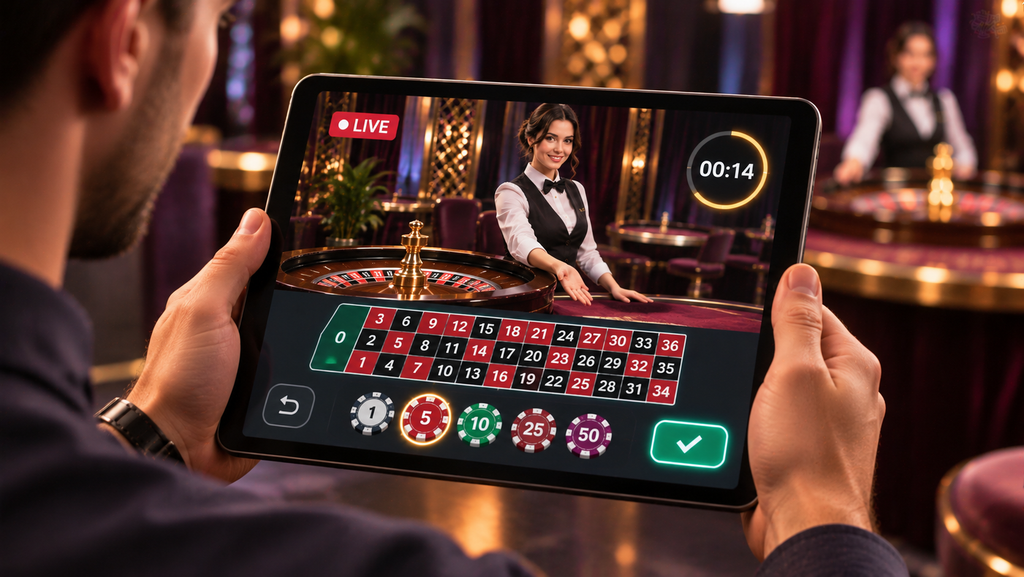
The live stream occupies most of the screen. Betting controls appear beside or over it, depending on the device. The player sees available chips, wager areas, the countdown, recent results and account balance.
The interface sends instructions to the game system. A player selecting a $5 chip and tapping red on a roulette layout creates a digital wager attached to that round. No physical chip crosses the studio table. The software records the selection, locks it when betting closes and settles it after the result is confirmed.
What each screen element does and what to check:
| Screen element | What it does | What the player checks |
| Live video | Shows the dealer and physical game | Clear picture and current table |
| Betting layout | Accepts digital wagers | Selected option and chip value |
| Countdown | Marks the open betting period | Time remaining before bets close |
| Balance | Shows available casino funds | Amount before and after the round |
| Result panel | Displays the completed outcome | Winning number, hand or side |
| History | Lists recent table results | Past outcomes for reference only |
| Chat | Sends table messages where available | Table etiquette and dealer replies |
One Round Has a Strict Digital Timeline
Every live dealer round moves through defined stages. Timing matters because players join from different locations and connection speeds. The platform needs one shared closing point.
A typical round follows six steps:
- The system opens betting and starts the countdown.
- Players select wagers through the digital layout.
- Betting closes at the same table time for all participants.
- The dealer completes the physical game action.
- Sensors or card scanners send the result to the system.
- The platform settles wagers and opens the next round.
Late taps fall outside the accepted betting window. The interface greys out or locks once the timer ends. That firm cut-off keeps dealer action and account records aligned.
Latency Affects Viewing; Official Table Time Stays Fixed
Video needs a moment to travel from the studio to the player’s screen. The platform accounts for this through its betting timer and system clock. The official round timeline sits with the game server. The video provides the visual broadcast.
A slower connection may lower picture quality or create a short pause. The accepted wager record stays tied to the server. Players can check the bet panel or game history if the stream briefly catches up after the action.

Blackjack Gives Players Individual Decisions
Live blackjack places several betting positions around one dealer table. Each player receives cards for the chosen seat or spot, while the dealer plays a single hand according to the table rules.
After the initial deal, the interface offers hit, stand, double or split. Options depend on the cards, stake and rules. A decision timer keeps the round moving. When time expires, the game applies the table’s stated default action.
Many live tables add side bets, additional betting spots or a bet-behind feature. These appear on the digital layout. The game information panel explains payouts and eligibility. Reading it before placing a chip takes seconds. Worth it.
Roulette Centres on One Shared Result
Everyone at a live roulette table watches the same wheel spin. Players place digital chips across numbers, colours, columns and other available areas before the countdown ends.
The dealer spins the wheel and ball. Once the ball settles, the result enters the game system through approved recognition equipment and dealer confirmation. Winning areas light up on the digital layout, then account balances update.
The history panel records completed rounds. Each new spin forms its own event, so the history serves as a table record. Useful context. Nothing prophetic there.
Some interfaces offer favourite bets or repeat-bet controls. They save tapping time, especially on a small screen. The player still confirms the amount and active selections before the timer closes. One old favourite can become an expensive typo if the chip value changed.
Baccarat Keeps Player Choices Compact
Baccarat usually offers player, banker or tie, with side bets available at some tables. The dealer handles the cards and follows fixed drawing rules. Players make the wager; the procedure decides when another card is drawn.
This fixed structure gives baccarat a steady rhythm. The interface shows the two hands, totals and final result. Scoreboards may display previous outcomes through common road formats. Visual records of the shoe, nothing more.
The game information panel explains commission or payout treatment for each table version. Variants handle banker wins or side bets differently. The table name alone may tell part of the story; the rules panel finishes it.
Table Selection Changes the Session
A live lobby can show several versions of the same game. Differences may include betting limits, speed, language, seat availability, side bets and rule variations. Worth comparing before opening the stream.
Minimum and maximum stakes appear in the lobby or table information. A standard table suits modest wagers; a high-limit room uses larger ranges. Speed tables shorten decision windows. Private or branded tables may use a distinct studio and schedule.
Two blackjack tables can differ in deck count, dealer actions, doubling conditions or side bets. Roulette tables may use different wheel types. Baccarat variants can alter payout structures. Small labels, real consequences.
Mobile Live Play Needs a Stable Connection
Live games stream continuous video. More data than a standard pokie. Home Wi-Fi often suits longer sessions. Mobile data works when the signal stays consistent and the allowance covers it.
Portrait mode places controls below the video; horizontal mode widens the table view. Text size, brightness and sound settings affect comfort during a longer session.
If the picture stalls, check the digital wager status and wait for the stream to recover. Repeated tapping creates confusion. The server record remains the useful reference for accepted bets and completed outcomes.
Battery use deserves a glance. Video, sound and screen brightness draw power. A charged phone avoids the deeply unimpressive ending where the dealer continues and the screen goes black.
Live Dealer Games Turn a Stream Into an Account Result
Australian online casinos use live dealer technology to connect physical tables with remote players. Cameras carry the studio action, the interface accepts bets, sensors capture results and the casino system settles the round.
The player’s role stays clear throughout: choose a table, read its limits and rules, place a wager during the open window, watch the result. Different games add their own decisions, pace and presentation. Underneath, the structure stays the same. Real dealer. Live feed. Digital balance. That compact combination explains the appeal.